
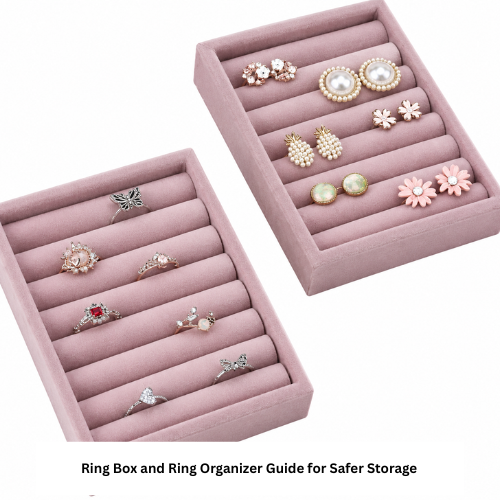
A well-designed ring box should protect rings from scratches, movement, moisture, and contact with other jewelry while keeping each piece easy to find. The best option depends on ring size, band width, stone height, collection size, travel needs, and whether the storage will remain on a dresser or move between locations.
Small engagement rings, wide wedding bands, raised gemstone settings, stacked rings, and oversized fashion pieces may require different slot spacing and lid clearance. Jewelry box factory shoppers should measure their collection and review the organizer’s usable interior rather than choosing only by its exterior appearance.
How to Choose a Ring Box for Your Collection
Start by counting the rings you currently own and estimating how many additional pieces you may add. A small case can work for a few daily-wear items, while a tray or multi-layer organizer may suit a larger collection.
A useful secure jewelry organizer guide can help buyers compare closures, construction, compartments, and storage placement before ordering.
Consider:
- Number of ring slots
- Slot width and depth
- Space between rows
- Interior lid clearance
- Cushion firmness
- Closure design
- Exterior dimensions
- Drawer or dresser fit
- Travel suitability
- Cleaning instructions
Avoid buying a large organizer when most of the compartments will remain empty and allow jewelry to move during transport.
| Storage type | Best suited to | Main advantage | Possible limitation | What to verify |
| Single-ring presentation case | Engagement or wedding presentation | Keeps one ring centered and visible | Limited everyday storage | Ring height and lid clearance |
| Multi-slot organizer | Medium or large ring collections | Separates many rings in rows | Wide bands may not fit standard slots | Slot dimensions |
| Velvet tray | Drawer storage and collection viewing | Easy access and soft surface | Usually lacks a protective lid | Drawer fit and dust protection |
| Small jewelry case | Rings plus a few other pieces | Compact and portable | Compartments may be shallow | Interior layout |
Measure Rings and Settings Before Buying
Ring slots are not always suitable for every band.
Measure or compare:
- Band width
- Ring diameter
- Stone height
- Setting width
- Stacked-ring thickness
- Decorative side details
- Guard or enhancer width
A high gemstone setting may contact the lid even when the band fits the slot. Verify internal height before buying.
A ring box designed for low-profile bands may not suit a tall engagement setting. Place the tallest pieces in deeper compartments or use a case with adequate lid clearance.
Ring Rolls, Slots, and Cushions
Ring rolls usually hold jewelry between padded ridges. They work best when the material grips the band gently without placing excessive pressure on stones or settings.
Check whether the rolls:
- Feel evenly padded
- Return to shape after pressure
- Have smooth seams
- Hold narrow and wide bands
- Are fixed or removable
- Leave space between raised settings
- Can be cleaned safely
- Show signs of loose adhesive
A very tight slot can strain delicate settings or make removal difficult. A loose slot may allow the piece to turn or fall out.
Velvet and Fabric Linings
A velvet ring box may offer a soft appearance, but buyers should verify the actual lining material and care instructions.
Inspect for:
- Loose fibers
- Rough seams
- Exposed adhesive
- Color transfer
- Strong odor
- Wrinkled fabric
- Dust retention
- Areas that catch prongs
Some delicate prongs can snag on long fibers. Test new storage carefully before placing valuable jewelry inside.
The velvet ring organizer tray provides a practical example of separated rows for collection storage, but buyers should verify the current tray size, slot count, material, and package contents.
Engagement and Wedding Ring Storage
An engagement ring box is often used for presentation, photography, ceremonies, or short-term protection. A wedding ring box may need space for two bands or a coordinated set.
Check:
- Number of ring positions
- Lid opening angle
- Hinge strength
- Interior height
- Ring orientation
- Photography appearance
- Closure security
- Personalization options
- Delivery time
- Gift packaging
Do not assume a decorative presentation case is suitable for long-term storage. Some designs prioritize appearance over capacity, dust protection, or daily durability.
Organizing Rings With Other Jewelry
A compact necklace and ring organizer may suit users who want one small case for rings, earrings, and short necklaces.
When combining jewelry types:
- Keep chains away from ring prongs.
- Separate soft metals from harder pieces.
- Store earrings with their backs attached.
- Avoid placing bracelets over raised settings.
- Use dividers to prevent movement.
- Keep frequently worn items accessible.
A detailed safe ring and jewelry organization guide can help owners separate rings, necklaces, and earrings without creating tangles or scratches.
Do not place several valuable pieces in one loose compartment simply to save space.
Home Storage Placement
Place the organizer on a stable, dry surface away from direct sunlight, bathroom humidity, open windows, and household chemicals.
Suitable locations may include:
- A dresser drawer
- A closet shelf
- A secured cabinet
- A dedicated jewelry armoire
- A bedroom storage drawer
- A home safe when appropriate
Avoid storing valuable jewelry beside sinks, drains, heaters, or areas where children and pets can reach it.
A jewelry organizer should not be treated as theft protection unless it is designed and installed for that purpose.
Travel Compatibility
For travel, choose a compact case with a closure that cannot open accidentally.
Check:
- Zipper or snap quality
- Ring-slot grip
- Interior padding
- Exterior stiffness
- Packed dimensions
- Carry-on fit
- Weight
- Removable sections
- Visibility of small pieces
- Ease of inspection
Keep valuable jewelry in accordance with transportation and insurance guidance. Do not place irreplaceable pieces in checked luggage without understanding the risks and applicable policies.
Setup and First Use
Before placing jewelry inside:
- Remove packaging.
- Inspect seams and hinges.
- Test the closure several times.
- Check the lining for debris.
- Wipe permitted surfaces.
- Allow packaging odor to dissipate.
- Test the tallest ring.
- Close the lid slowly.
- Turn the organizer gently to check movement.
Do not force the lid closed over a raised gemstone.
The premium ring organizer tray listing can help shoppers compare compartment presentation, but verify the current dimensions, materials, slot layout, seller, and package contents.
Safety Around Children and Pets
Small rings, earring backs, keys, magnets, and removable inserts can create swallowing or choking hazards.
Store the organizer:
- Outside children’s reach
- Away from pets
- With the lid or closure secured
- Without loose keys nearby
- Away from unstable shelf edges
- Separate from medicines and cosmetics
A musical or children’s jewelry case should still be inspected for removable hardware and small components.
Conclusion
The right ring box should match the number, width, and height of the rings while separating delicate surfaces and keeping each piece easy to access. Measure the collection, inspect the lining and closure, choose a suitable home or travel format, and review cleaning, warranty, and return terms before buying.
FAQ
How many slots should a ring organizer have?
Choose enough for the current collection plus a small amount of future growth without leaving excessive unused space.
Can an engagement ring go in any slot?
Not always. Raised stones and wide settings may require additional depth and lid clearance.
Is velvet safe for rings?
It can provide a soft surface, but check for loose fibers, color transfer, rough seams, and snagging around prongs.
Should rings be stored together?
Separate them when possible to reduce scratching, tangling, and contact between settings.
Can a jewelry case protect against theft?
A normal organizer provides storage, not full theft protection. Use appropriate secure storage for valuable collections.
